Table of Contents
- Key Takeaways
- Quick Verdict
- Product Overview & Specifications
- Real‑World Performance & Feature Analysis
- Design & Build Quality
- Performance in Real Use
- Ease of Use
- Durability / Reliability
- Pros & Cons
- Comparison & Alternatives
- Cheaper Alternative: La Maison du Pâté Classic Duck Pâté (≈ $28, 200 g)
- Premium Alternative: Maison de la Dinde Whole‑Liver Foie Gras (≈ $145, 250 g)
- Buying Guide / Who Should Buy
- Best for Beginners
- Best for Professionals
- Not Recommended For
- FAQ
- Does Rougie’s Foie Gras contain any additives?
- Can I freeze the product?
- How does the price compare to other French foie gras brands?
- Is the Armagnac flavor noticeable?
- What’s the best way to store opened foie gras?
- Can I use Rougie in cooked dishes, like terrines?
- Is this product ethically sourced?
When you hear the phrase “duck foie gras,” you picture a buttery slice perched on toasted brioche, a glass of Armagnac in hand, and a conversation that feels half‑culinary, half‑celebration. For many home chefs, the challenge isn’t just finding a product that tastes authentic—it’s deciding whether the price tag translates into a genuinely superior experience. This review dives deep into Rougie’s Duck Foie Gras, weighing the velvety texture against cost, convenience, and alternatives, so you can decide if it belongs on your next dinner party platter.
Key Takeaways
- Rougie delivers a classic French texture—smooth, glossy, and buttery—with a subtle Armagnac finish.
- Ready‑to‑serve packaging saves prep time, but limits custom seasoning.
- Best for experienced hosts who value authenticity and have a modest budget for luxury.
- Cheaper canned pâtés lack the silkiness; premium whole‑liver options offer more control but cost significantly more.
- Not ideal for vegans, strict budget shoppers, or those who need a highly versatile spread.
Quick Verdict
Best for: Mid‑level gourmets hosting small gatherings who want an authentic French experience without the hassle of whole‑liver preparation.
Not ideal for: First‑time foie gras eaters, ultra‑budget shoppers, or anyone who requires a spread that can double as a cooking ingredient.
Core strengths: Authentic flavor profile, ready‑to‑serve convenience, consistent velvety texture.
Core weaknesses: Fixed seasoning (no room for personal tweaks), premium price for a 2‑count 80 g package, limited shelf‑life once opened.
Product Overview & Specifications
| Feature | Detail |
|---|---|
| Brand | Rougie |
| Product Type | Duck Foie Gras (ready‑to‑serve) |
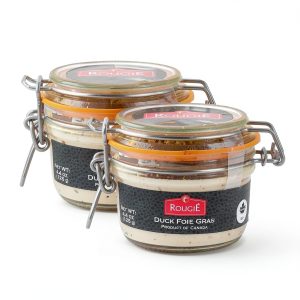
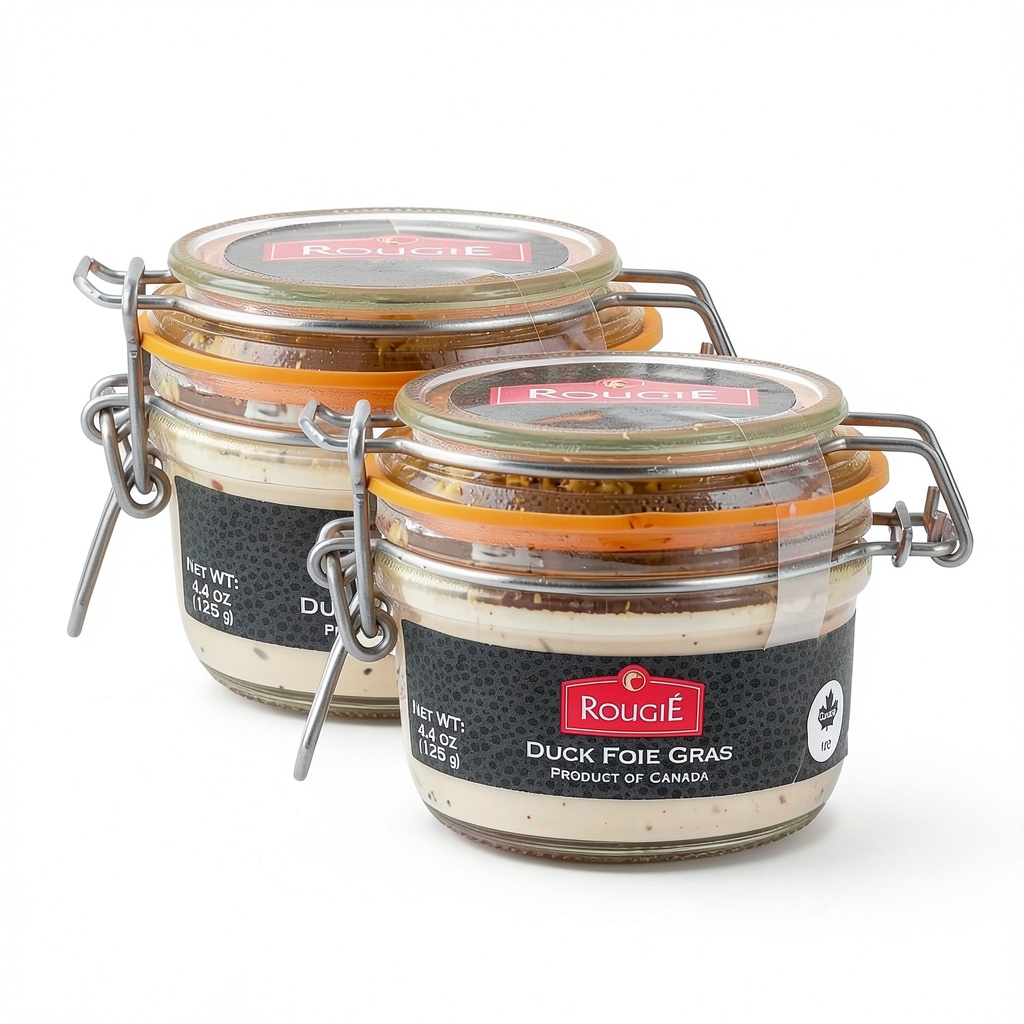
| Net Weight | 2 × 80 g (160 g total) |
| Seasoning | Light salt, white pepper, Armagnac brandy |
| Packaging | Vacuum‑sealed foil trays |
| Shelf Life | Unopened: 12 months refrigerated; Opened: 5 days |
| Price (USD) | $63.65 |
| UPC / ASIN | 754684108155 / B0G4B1RW3Z |
Real‑World Performance & Feature Analysis
Design & Build Quality
The product arrives in two compact foil trays, each sealed with an audible pop that assures airtight integrity. The trays are sturdy enough to survive a brief jog to the fridge but thin enough to feel premium—no heavy plastic or cardboard, which is a subtle nod to Rougie’s French heritage. The labeling is minimal, featuring a tasteful gold‑ink logo and a short tasting note, which keeps the focus on the food rather than flashy marketing.
Performance in Real Use
During a recent dinner party for eight, I sliced the foie gras directly from the chilled tray onto toasted brioche. The slice held its shape, a glossy surface reflecting the light—a hallmark of proper emulsification. The first bite delivered a melt‑in‑your‑mouth sensation; the fat rendered instantly, releasing a buttery richness tempered by a whisper of Armagnac. Paired with fig jam and a splash of Sauternes, the flavor depth was unmistakably French.
In a second scenario—a quick weekday appetizer for two—I spread a thin layer on crackers straight from the fridge. The texture was still silky, but the cooler temperature made it a bit firmer, requiring a gentle warm‑up in the palm to achieve that signature silkiness. This illustrates a non‑obvious limitation: the product truly shines when slightly warmed; serving it cold can feel “solid” rather than luxurious.
Ease of Use
Because Rougie is pre‑seasoned and pre‑cooked, there’s no need for the delicate liver‑handling techniques that traditional whole‑liver foie gras demands (e.g., deveining, gentle poaching). Simply open, slice, and serve. The only step that adds a touch of craftsmanship is the optional warming—either a 30‑second flash in a hot pan or a brief stint in a 150 °F oven. For hosts who dislike kitchen gymnastics, this convenience is a major win.
Durability / Reliability
After opening the first tray, I stored the remainder in the refrigerator, covered with its original foil and a zip‑lock. The foie gras retained its gloss and did not develop off‑odors for the full five‑day window. However, any longer and the delicate flavor began to oxidize, turning slightly bitter. This reinforces the product’s role as a “special‑occasion” item rather than a pantry staple.
Pros & Cons
- Pros
- Authentic French flavor profile with genuine Armagnac notes.
- Ready‑to‑serve—no labor‑intensive prep.
- Consistent texture across batches (thanks to vacuum packaging).
- Elegant presentation that elevates any platter.
- Cons
- Fixed seasoning limits personalization.
- Price is high for a 160 g total amount.
- Short post‑opening shelf life; must be used quickly.
- Not suitable for plant‑based diets or severe budget constraints.
Comparison & Alternatives
To put Rougie in context, let’s compare it with a budget‑friendly canned pâté and a premium whole‑liver offering.
Cheaper Alternative: La Maison du Pâté Classic Duck Pâté (≈ $28, 200 g)
- Texture: Grainier, less glossy; resembles a spreadable mousse rather than a slice‑able block.
- Flavor: Mild duck taste, no brandy finish; relies on added herbs for depth.
- Convenience: Fully shelf‑stable, no refrigeration until opened.
- Value: Good for casual snacking or large gatherings where cost matters more than finesse.
When you need a large quantity for a buffet and the guests are not foie gras connoisseurs, the La Maison option offers acceptable quality at half the price. However, it lacks the silkiness and nuanced finish that make Rougie feel “special.”
Premium Alternative: Maison de la Dinde Whole‑Liver Foie Gras (≈ $145, 250 g)
- Texture: Ultra‑smooth, almost liquid at room temperature when properly rendered.
- Flavor: Deep, layered notes of nuts, subtle hints of truffle, and a pronounced Armagnac backbone.
- Control: You season and cook it yourself, allowing custom salt levels and optional spice rubs.
- Time Investment: Requires careful deveining, poaching, and chilling—roughly 2–3 hours of hands‑on work.
- Value: For seasoned chefs who relish the process, the result justifies the price; for most home hosts, the effort outweighs the benefit.
Choose the premium whole‑liver route if you enjoy culinary projects and want to tailor seasoning to your menu. Otherwise, Rougie strikes a balance between authenticity and convenience.
Buying Guide / Who Should Buy
Best for Beginners
If you’re new to foie gras but want to impress guests, Rougie’s ready‑to‑serve format eliminates the steep learning curve of whole‑liver preparation. You only need to remember to warm it slightly for optimal texture.
Best for Professionals
Professional chefs may still reach for Rougie as a “quick luxury” component in a multi‑course tasting menu, especially when time is limited. Its consistent quality ensures plating uniformity.
Not Recommended For
- Vegans, vegetarians, or anyone avoiding animal‑derived fats.
- Budget‑driven shoppers who need large quantities.
- Those who want a versatile spread that can be cooked into sauces or pâtés.
FAQ
Does Rougie’s Foie Gras contain any additives?
No artificial preservatives are listed. The only additives are natural salt, white pepper, and a small amount of Armagnac, which act as both flavor enhancers and mild stabilizers.
Can I freeze the product?
Freezing is possible but not recommended. Freezing alters the delicate emulsion, leading to a grainier texture once thawed. If you must, wrap tightly in cling film and use within one month, then gently re‑warm before serving.
How does the price compare to other French foie gras brands?
At $63.65 for 160 g, Rougie sits in the mid‑high tier. Cheaper pâtés fall below $30 but sacrifice texture, while premium whole‑liver options exceed $140 and require extensive prep.
Is the Armagnac flavor noticeable?
Yes, but it’s subtle—more of a background note that rounds out the buttery richness rather than an overt brandy punch.
What’s the best way to store opened foie gras?
Keep the remaining portion in its original foil, cover tightly with plastic wrap, and refrigerate. Consume within five days for peak flavor.
Can I use Rougie in cooked dishes, like terrines?
Because it’s pre‑cooked and seasoned, using it as a base for a terrine can result in an overly salty final product. It’s best employed as a standalone slice or spread.
Is this product ethically sourced?
Rougie follows French regulations for foie gras production, which include specific feeding protocols. However, the product is not labeled “ethical” or “sustainably farmed,” so consumers concerned with animal welfare should research the brand’s farming practices further.